
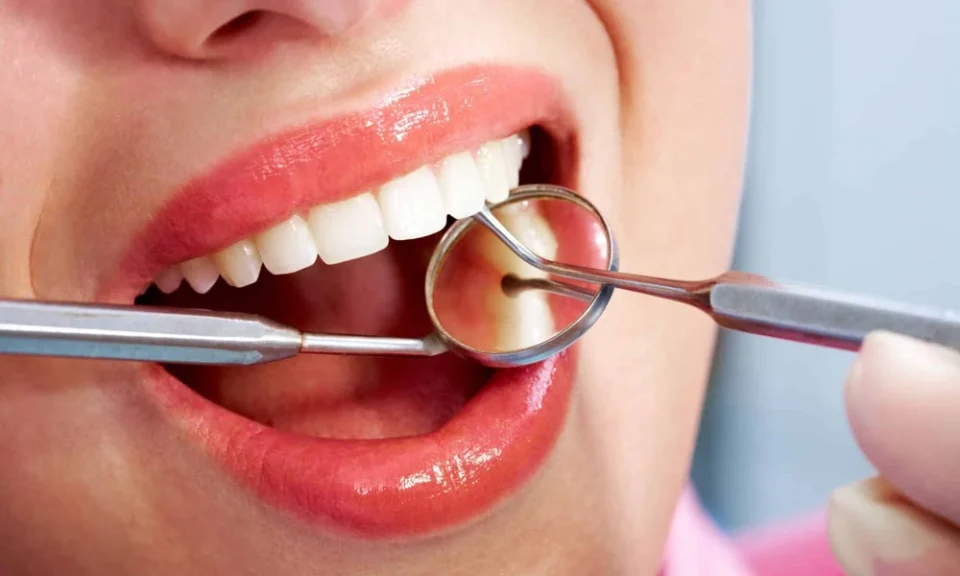
You may want a smoother edge, a shorter point, or a more even smile, but still feel uneasy about ending up with teeth that look copied and flat. That concern is valid. Natural teeth are not identical, and the small differences in shape, height, texture, and light reflection are often what make a smile look real. Good cosmetic work respects that, which is why choosing a family dentist in Buford can help preserve the natural character of your smile.
In a family and cosmetic dentist office, dental reshaping is usually conservative. The goal is not to erase your features. The goal is to refine them. A dentist studies the line of your smile, the way your lips frame your teeth, the tiny asymmetries that already suit your face, and then removes only small amounts of enamel where change will help without making the result look artificial.
Natural tooth contouring works best when small differences stay intact
Teeth naturally vary from one side to the other. Central incisors are often similar, but not perfectly matched. Lateral incisors may sit slightly back. Canines tend to have more character in their edges and angles. Even surface texture matters, because smooth, featureless enamel reflects light in a way that can make teeth look fake.
Natural-looking cosmetic dental reshaping depends on preserving these details. If every tooth is rounded to the same outline or shortened to the same plane, the smile can lose depth. Dentists avoid that by reshaping with restraint. They may soften one sharp corner, shorten a chip, or refine a bulky edge, while keeping the natural anatomy that makes your smile yours.
This matters because enamel does not grow back. Cosmetic contouring removes a limited amount of enamel, so planning comes first. According to MedlinePlus information on tooth contouring, reshaping is generally used for minor corrections such as fixing small chips, uneven edges, or slight overlap. That narrow scope is part of what protects natural variation.
Cosmetic dental reshaping can improve balance without making teeth look identical
A lot of people come in asking for symmetry when what they really want is balance. Those are not the same thing. Perfect symmetry can look stiff. Balance looks easier and more believable. A dentist may leave a faint difference between matching teeth if removing it would flatten the smile or weaken a healthy edge.
The problem starts when cosmetic treatment is approached like a template. If every patient gets the same tooth shapes, the same lengths, and the same polished finish, individual character disappears. You might fix the feature that bothered you and still feel something is off, because your smile no longer matches your face.
That is why photos, study models, and close visual analysis matter. Dentists often evaluate tooth proportion, gingival display, bite contact, and facial midline before reshaping. Research on esthetic restorative planning has shown that natural dental appearance depends on proportion, texture, translucency, and harmony with surrounding structures, not just whiteness or straightness. You can see that emphasis in this clinical review on esthetic dental rehabilitation.
Tooth reshaping for a natural smile also means knowing when not to reshape. If a tooth looks uneven because of wear, grinding, bonding failure, or bite problems, contouring alone may not be the right fix. In those cases, a dentist may suggest bonding, orthodontics, or bite adjustment so the result lasts and still looks natural.
Professional planning protects enamel and preserves individual tooth character
At home, it can be tempting to file a rough edge with an online kit or copy what someone showed on social media. That usually goes wrong for the same reason rushed cosmetic work goes wrong. Natural teeth are layered structures, and a small change in one spot can alter bite, sensitivity, and appearance at the same time.
| Approach | What It Can Address | Main Benefit | Main Risk |
|---|---|---|---|
| Professional enamel reshaping | Minor chips, slight uneven edges, small shape imbalances | Controlled changes that preserve natural anatomy | Irreversible enamel removal if overdone |
| Dental bonding | Small gaps, worn corners, contour correction, edge rebuilding | Adds shape instead of removing more enamel | Can stain or chip over time |
| Orthodontic treatment | Overlap, rotation, spacing, bite-related irregularities | Moves teeth rather than disguising position issues | Longer treatment time |
| DIY filing or mail-order fixes | Unsupervised cosmetic changes | No real diagnostic value | Permanent damage, sensitivity, poor bite, unnatural shape |
The safest cosmetic plan is often the least aggressive one. If a canine looks too pointed, a dentist may reduce only the tip and keep the natural ridge lines. If one front tooth edge is longer, a tiny adjustment may be enough. If both front teeth look uneven because one has worn differently, bonding may preserve more enamel than trimming the other tooth to match.
Small treatment choices shape the final result in cosmetic dentistry
Details that seem minor can change the entire look of your smile. Edge translucency affects whether teeth look youthful or opaque. Line angles influence whether a tooth appears narrow, broad, soft, or square. Surface texture changes how light moves across enamel. Skilled cosmetic dentistry uses these details carefully so your smile looks refreshed, not manufactured.
You deserve to ask direct questions before any reshaping starts. Ask how much enamel will be removed. Ask whether the dentist plans to preserve small asymmetries. Ask if bonding would be more conservative. If a proposed result looks too uniform in a mockup, say so. That instinct matters.
Clear steps help you protect your smile before cosmetic reshaping
Ask for a conservative plan. Tell the dentist you want refinement, not a standardized smile. Ask which features will stay the same and which ones truly need change.
Request a visual preview. Photos, digital imaging, or a simple mockup can reveal whether the planned shape still looks like you. This is often where over-uniform designs become obvious.
Discuss alternatives before enamel is removed. If the issue is wear, spacing, or tooth position, bonding or orthodontic treatment may preserve more natural structure than contouring alone.
Cosmetic reshaping can be subtle, elegant, and true to your features when it is done with restraint. The best result is not a smile that looks perfect on paper. It is a smile that still looks like you, only more balanced and at ease. If you are considering care from a family and cosmetic dentist, ask for a plan that protects enamel, respects natural variation, and keeps your smile recognizable.
